
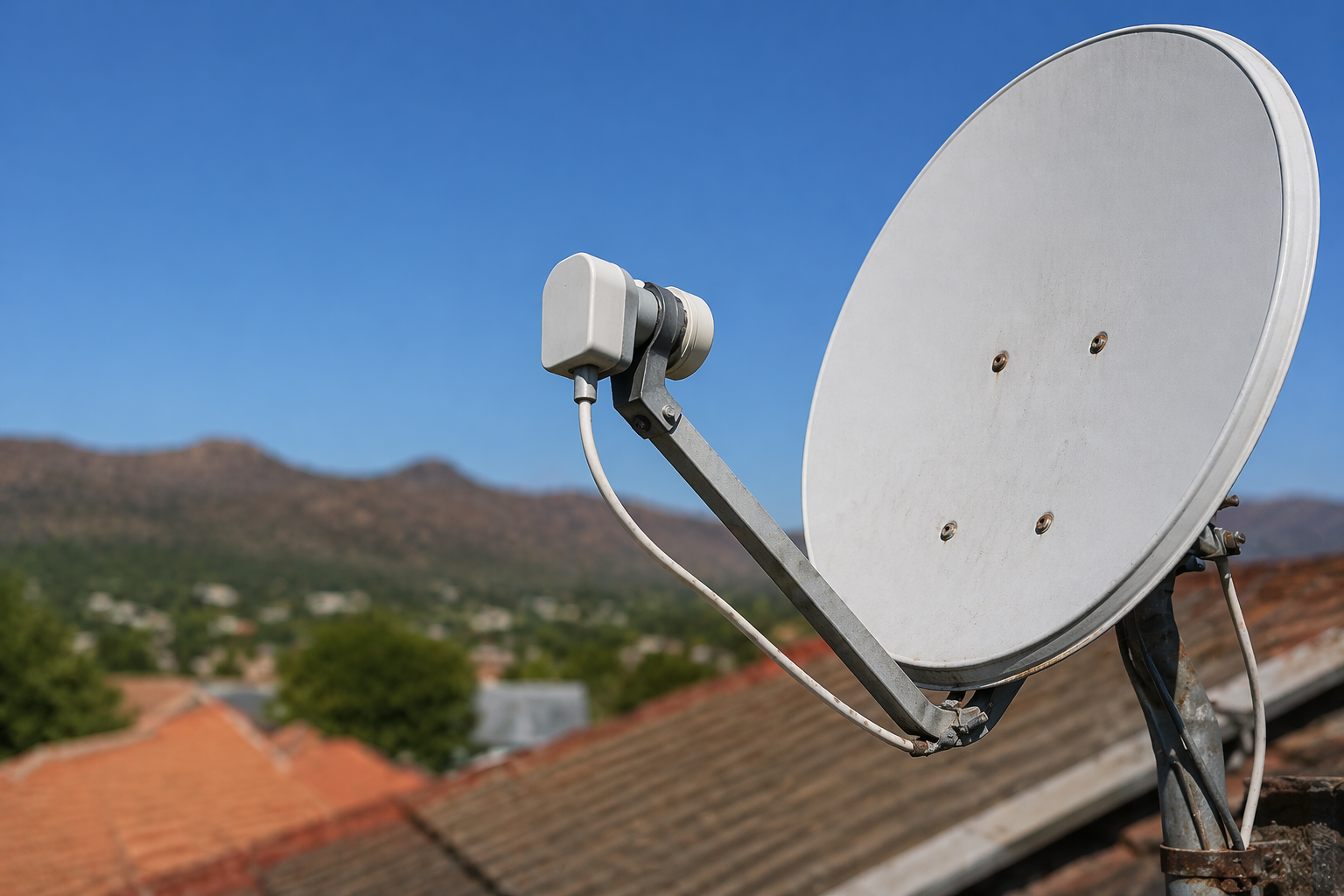
If your DStv shows no signal, E48-32, or “searching for signal”, the problem is almost always outside. It is usually the dish, cables, or connections, not the decoder itself.
In Bela-Bela, this happens often after wind, rain, or gradual wear over time. A system that worked perfectly yesterday can suddenly stop because something small shifted or weakened. Before you replace anything or start guessing, there are a few practical things you can check that will quickly point you in the right direction.
Most signal problems follow a pattern. They either start with small interruptions and get worse, or they happen instantly after weather or movement. Understanding that pattern makes it easier to identify the cause without making unnecessary changes that can complicate the issue.
Get Your DStv Signal Back Today
Fill in the form below and get a technician in Bela-Bela to quickly find the exact problem and restore your signal without delays or guesswork.
Common Causes of DStv No Signal in Bela-Bela
Most DStv signal problems are caused by a small number of issues, even though they may appear differently on your screen. Whether you see E48-32, “searching for signal”, or channels breaking up, the underlying cause is usually one of the following:
- Dish misalignment caused by wind or movement
The dish needs to point precisely at the satellite. Even a slight shift can break that alignment. Wind is the most common cause, but loose brackets or aging mounts can also allow the dish to move over time. - Damaged or aging cables
Cables are constantly exposed to sun, rain, and temperature changes. Over time, they can crack or weaken internally. This reduces signal strength or causes complete signal loss. - Faulty or failing LNB
The LNB is the part that receives the signal from the satellite. When it starts failing, the signal becomes unstable or disappears completely. This can happen suddenly or gradually. - Loose or incorrect connections
A cable that is not properly secured or connected can interrupt signal immediately. This often happens after moving the decoder or attempting a DIY fix. - Obstructions blocking the dish
Trees grow, branches extend, and new structures can appear. Anything that blocks the line of sight between the dish and the satellite will weaken or stop the signal. - Heavy rain or environmental factors
Rain can temporarily interfere with signal. However, if the signal does not return after the weather clears, it usually means something else has been affected. - Extra View or multi-decoder issues
Setups with multiple decoders are more complex. Communication between units can affect signal, especially if cables or configurations are incorrect. - Incorrect or poor installation
If the system was not installed properly, signal problems may appear repeatedly. This includes poor alignment, weak mounting, or incorrect cable routing.
These causes may seem simple, but they affect signal in different ways. Some cause a complete loss of signal, while others cause intermittent issues that get worse over time.
Error messages like E48-32 or “searching for signal” do not tell you the exact cause. They only indicate that the decoder is not receiving a stable signal. This is why focusing on the physical setup is more effective than trying to fix things through settings.
In many cases, the problem builds up slowly. You might notice channels freezing occasionally, then more frequently, until the signal disappears completely. In other cases, it happens instantly after a storm or strong wind.
Understanding this helps you avoid unnecessary steps. Instead of resetting the decoder repeatedly or replacing equipment, you can focus on the actual source of the problem.
Stop Guessing and Fix Your Signal Properly
Fill in the form below and get a fast diagnosis from a DStv technician in Bela-Bela. No unnecessary changes, just the right fix the first time.
What to Check First Before Calling a Technician
Before calling a technician, there are a few simple checks you can do yourself. These checks help you determine whether the problem is minor or something that needs professional attention.
- Look at the dish position
Check if the dish looks slightly out of place, tilted, or loose. Even a small shift can affect signal significantly. - Inspect visible cables for damage
Look for cracks, exposed wires, or worn sections. Damage is often visible near connection points or where cables are exposed to weather. - Check all connections are secure
Ensure that cables are tightly connected at the decoder and any visible connection points. Loose connections are a very common cause of signal loss. - Restart the decoder properly
Turn off the decoder, unplug it, wait a few minutes, and switch it back on. This can resolve temporary issues. - Consider recent weather conditions
If there has been heavy rain or strong wind, the signal may return once conditions improve. If it does not, the setup may have been affected. - Check for new obstructions
Look around the dish for anything blocking it, such as tree branches or new structures. - Use the signal strength screen
Access the signal settings on your decoder. This can help you determine whether any signal is being received at all. - Test multiple channels
Switching between channels helps confirm whether the issue is affecting everything or only specific channels.
These checks are simple, but they can quickly narrow down the problem. In some cases, you may even identify the issue without needing further help.
However, it is important to know your limits. Signal alignment, component testing, and proper installation adjustments require precision. Guessing can make things worse.
For example, adjusting the dish without proper tools can move it further out of alignment. What was a small issue can become a complete signal loss. Similarly, handling cables incorrectly can damage them further.
Many people try to fix the problem by replacing parts without knowing the cause. This often leads to unnecessary expenses and does not solve the issue. A cable might be replaced when the real problem is alignment. A decoder might be reset repeatedly when the issue is outside.
A proper approach focuses on identifying the exact cause before making changes. This saves time and prevents additional problems.
If your signal does not return after these checks, it usually means the issue requires professional attention. A technician has the tools and experience to test signal strength accurately, identify faults, and fix them correctly.
Fix Your DStv Signal Fast in Bela-Bela
Fill in the form below now and get reliable help with your DStv signal problem. Whether it is no signal, E48-32, or constant interruptions, get it sorted quickly and properly.